Introduction to Calligraphy

Steps in this Experience
2 Steps (…)
  1. 1. Introduction
  2. 2. Materials & setup
About this Experience

Created by Mrs Aouda Fogg, this elegant introduction to calligraphy invites guests into her botanical atelier to explore the art of letter-making at a relaxed pace. The experience is guided by a series of short filmed chapters led by her trusted calligraphy teacher, who leads guests from first strokes to a finished seasonal card, with botanical morsels and tipples served along the way.

Meet your host
Miss Eleanor Whitcombe

A skilled calligrapher and patient tutor, Miss Whitcombe has spent many years studying traditional lettering forms and teaching the art of the pen. Invited by Mrs Aouda Fogg to guide this experience, she shares her calm instruction and practiced hand so guests may learn with confidence and ease.

1.

Introduction

Created by Mrs Aouda Fogg, this elegant introduction to calligraphy invites guests into her botanical atelier to explore the art of letter-making at a relaxed pace. The experience is guided by a series of short filmed chapters led by her trusted calligraphy teacher, who leads guests from first strokes to a finished seasonal card, with botanical morsels and tipples served along the way.

Materials & setup
2.

Materials & setup

Dip Pen
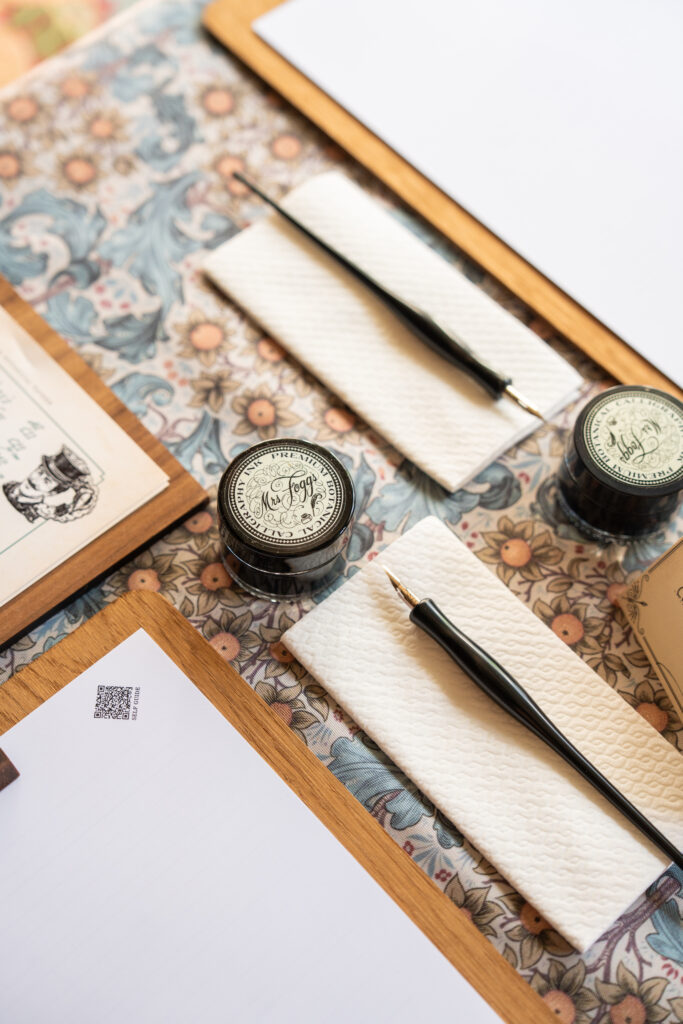
Your dip pen is the primary tool for this experience. Its weight and balance are designed to sit comfortably in the hand, allowing you to focus on gentle movement rather than force. Unlike a modern pen, it responds to pressure, producing thicker and finer lines as you write.

Calligraphy nib

Nib
The nib is the metal tip fitted to the pen and is responsible for shaping each stroke. It flexes slightly as you apply pressure, creating the characteristic contrasts of calligraphy. Treat it gently and wipe it clean regularly to maintain a smooth flow of ink.

Paper
The paper has been selected for its smooth surface, which allows the nib to glide without catching. This helps you practise confidently and prevents ink from bleeding. Use the practice sheets freely — they are there for exploration, not perfection

Indian ink

Botanical Ink
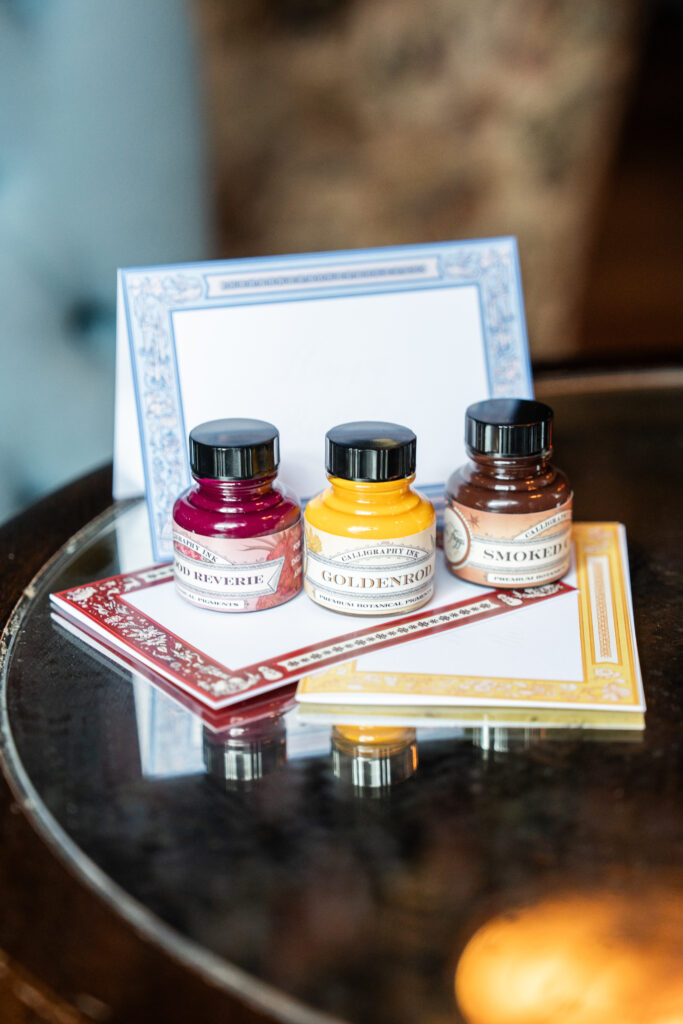
These richly coloured inks are inspired by botanical sources and chosen for their depth and character. Dip lightly, allowing excess ink to fall away before writing. The ink should sit crisply on the page, revealing the natural variation of each stroke.

Ink Wells
The ink wells hold just enough ink for steady progress without spills. Their weight helps keep them stable as you work. Return the lid between dips if you wish to slow the ink’s exposure to air.

Blotting Paper
Blotting paper is used to gently lift excess ink and prevent smudging. A light touch is all that’s needed — let the paper absorb, rather than pressing down.

Practice Sheets
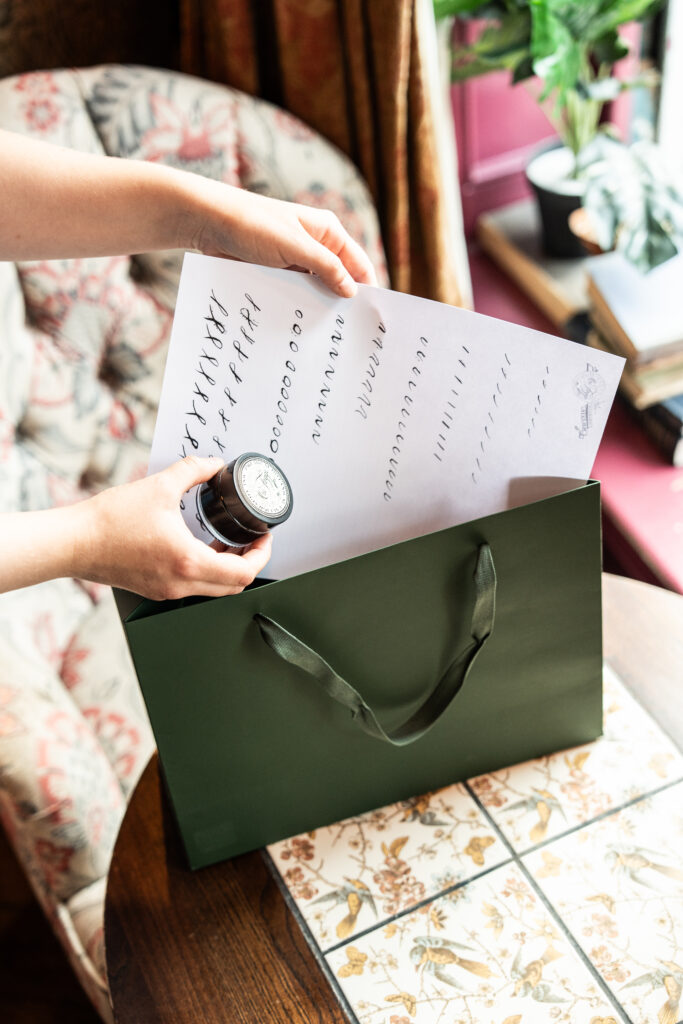
These sheets provide space to warm up your hand and experiment with strokes and letterforms. Use them to repeat movements, find your rhythm, and build confidence before moving on to your final piece.

Congratulations!

Thank you for completing this introduction to calligraphy — we hope you’ve enjoyed taking your first steps with pen and ink.

Next steps

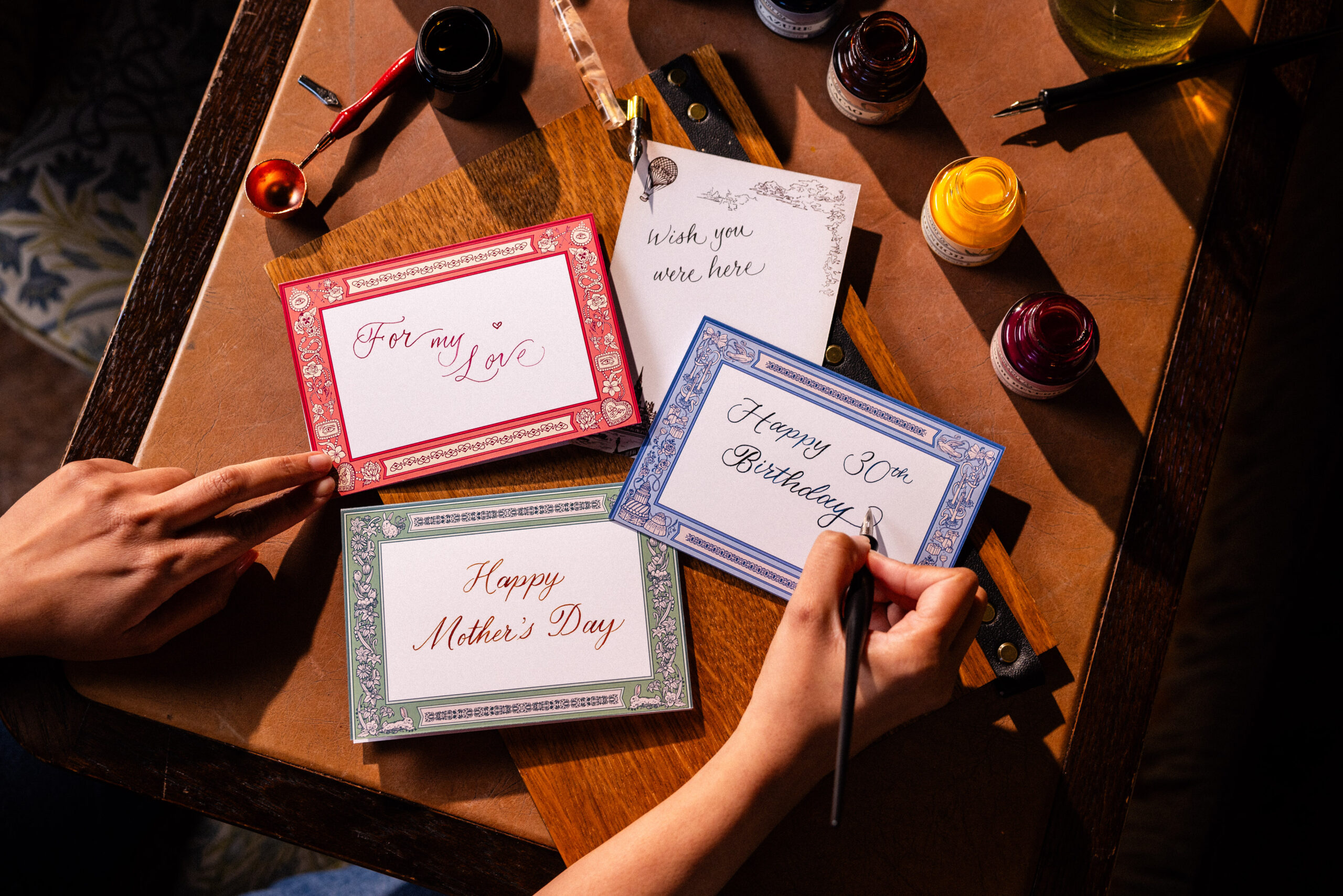
You are now invited to visit the stationery table and select up to five gift cards or postcards to complete in your own time. Some designs include lightly printed lettering to guide your hand; these are there to support your practice and help build confidence as you continue refining your strokes. Take your time, enjoy the process, and make each piece your own.

Of course, at any time in the process you can review any of the previous steps of the tutorial.